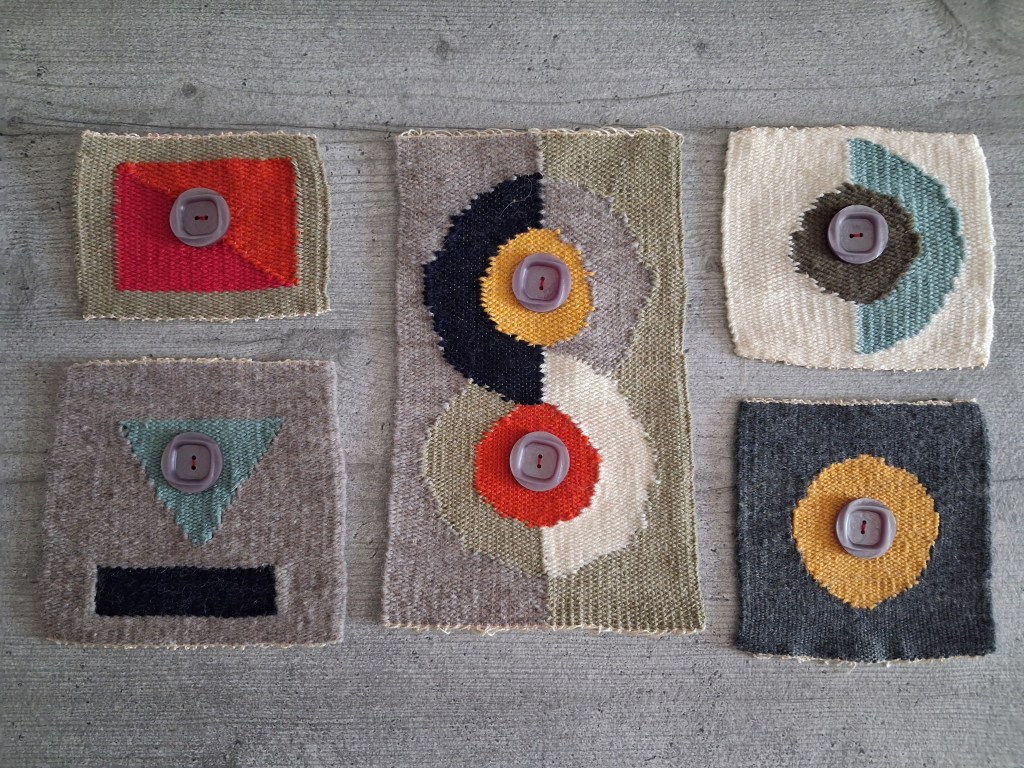
I didn’t know what to publish as my first PieLilli post. I had so many ideas! I wanted everything to be perfect: the tapestries, the inspiration, and the playlist. Not a single thing could be out of place.
You know what happened? It took me months to decide. Months of wondering, second thoughts, weaving, undoing (at a certain point, I was feeling like Penelope, each night undoing my own work!), despair, peak of enthusiasm….there was no way out. My plan was to combine a lifelong passion I’ve always had, music, with my creative side through weaving. Yet, something was missing to start off. Then, a tiny little thing – or rather, an old card of tiny little things – helped me clear my thoughts and find the right track to begin this journey.
The Works
I recently got into collecting buttons, so, as almost every newbie, I started buying vintage buttons without real criteria – without knowing a thing, you could say. And yet, this random shopping gave me the right inspiration. Among some vintage button cards I bought a few months ago, there was one that caught my eye.
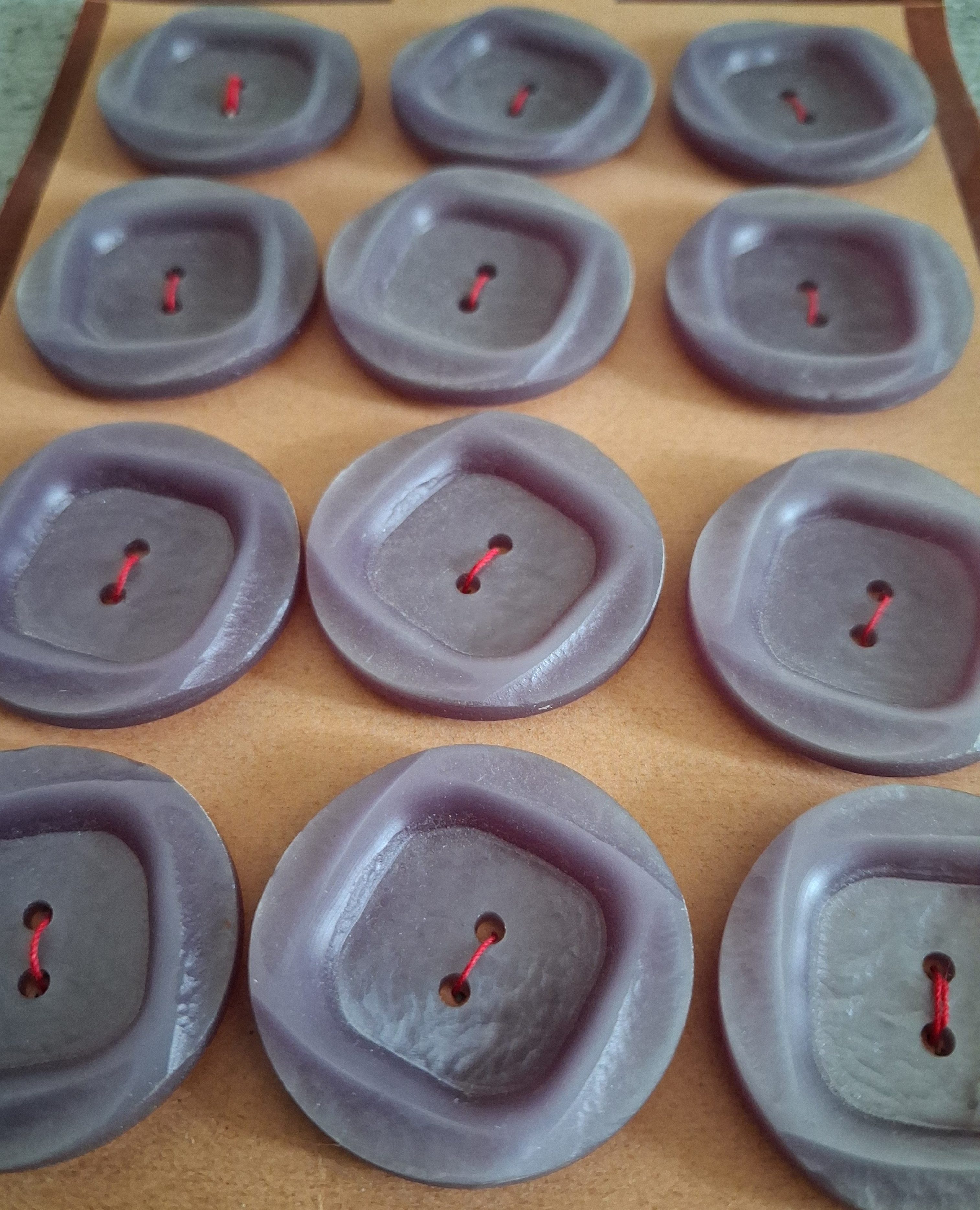
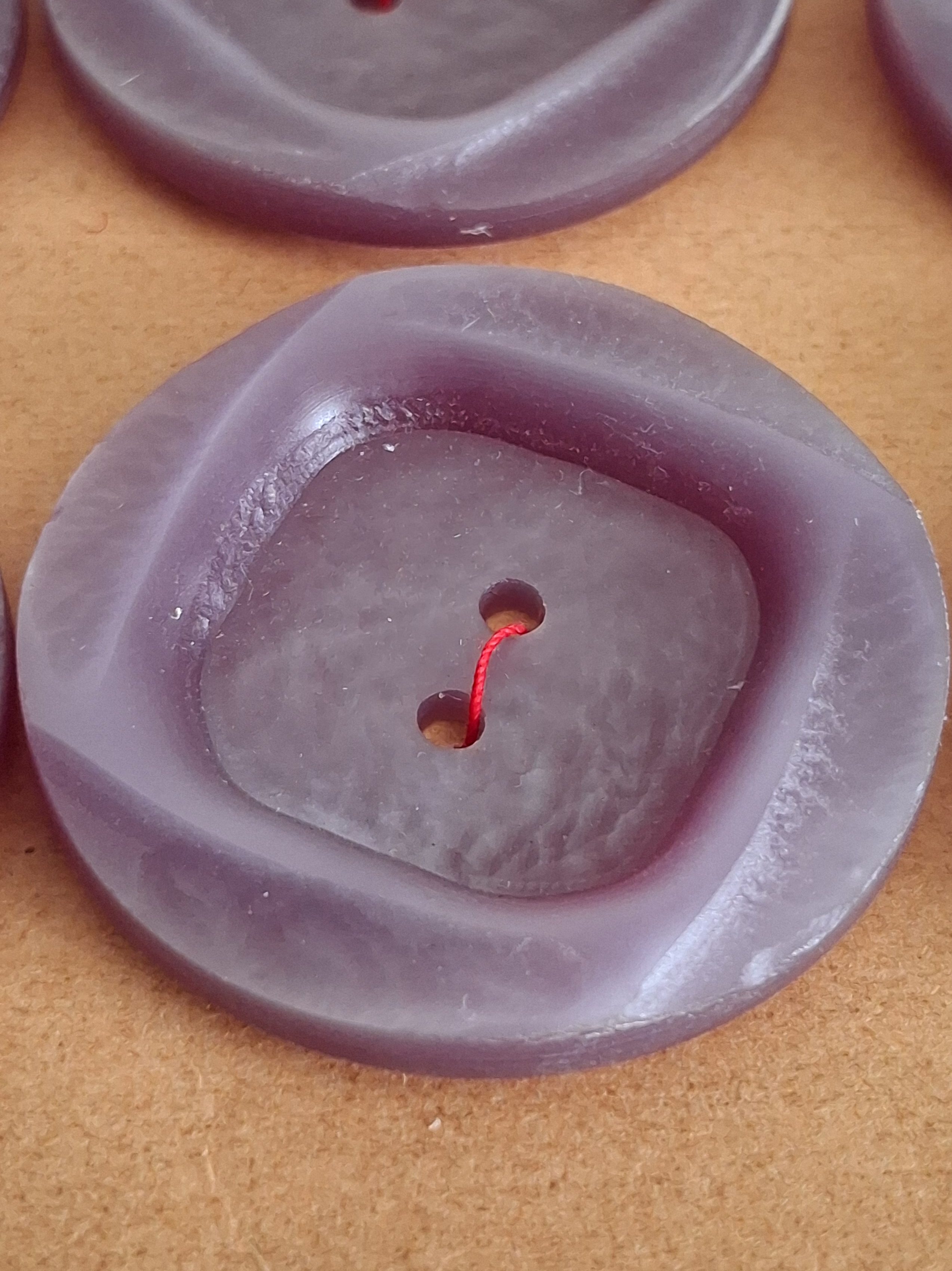
They were sold to me as vintage buttons dating back to the 1940s-1950s from an old Italian haberdashery that is now closed. Unfortunately, this is not an isolated case nowadays. These historic shops are closing more and more everywhere. Of course, their storehouses are a treasure for people like me, who love yarns, cloths, threads and buttons, but I cannot help feeling a bit of nostalgia. Back in the nineties, when I was a young teenager, I remember the feeling of entering these cozy shops, I still remember the smell and, although I cannot deny I often buy from online stores, I still think that we could – and should – find a way to stop them all from disappearing.
Back to our buttons now. I immediately loved the color, one of my favorites, but it was the way they were treated that fascinated me. A circular shape with a square inside. I love the effect they achieved because the square is not clearly defined and separated from the edges of the button, but somehow it “melts” into the circular shape. So, this blending together of geometric shapes, made me instantly think of geometric abstraction and how it would be perfect for my first weaving project.
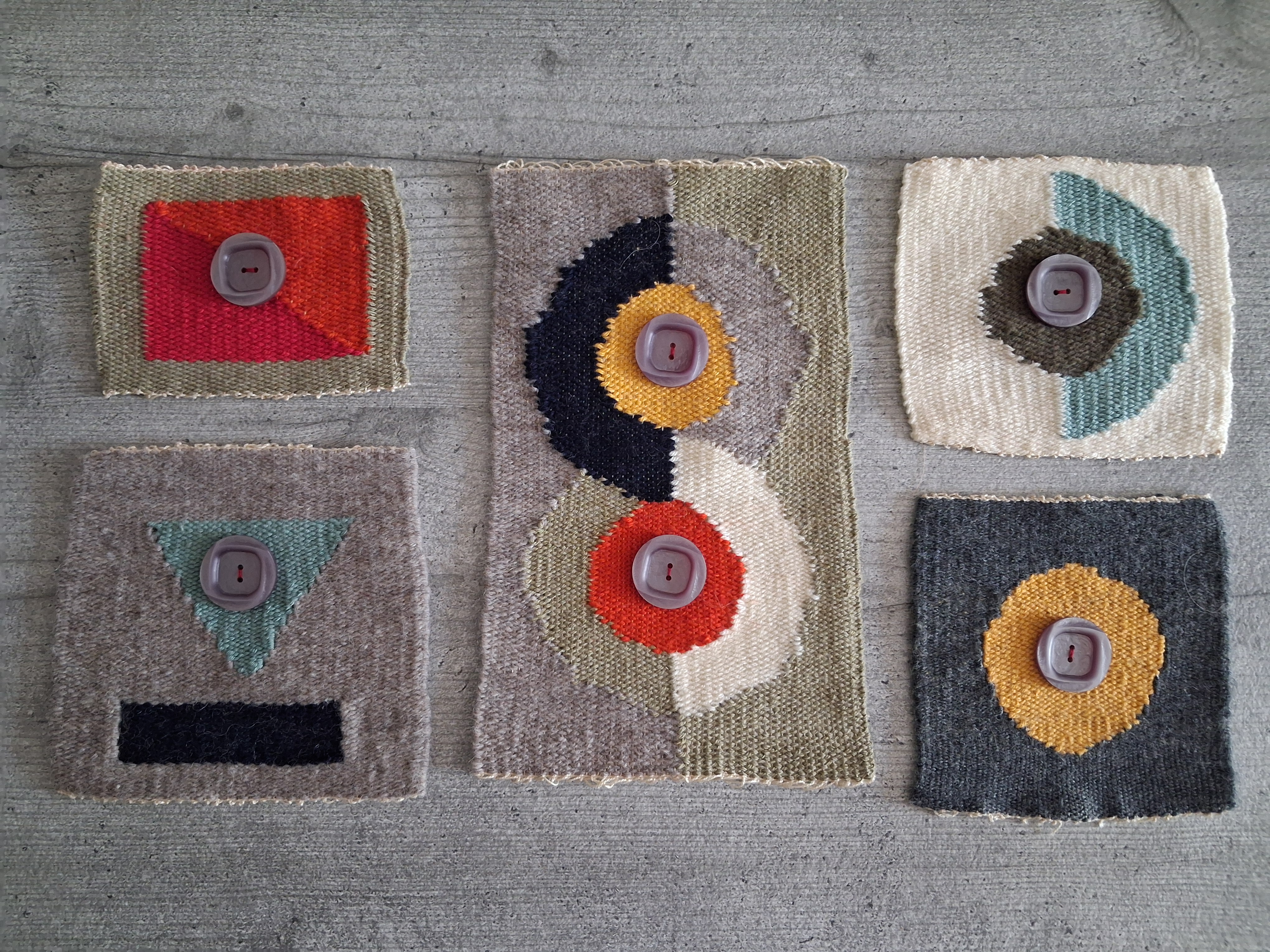
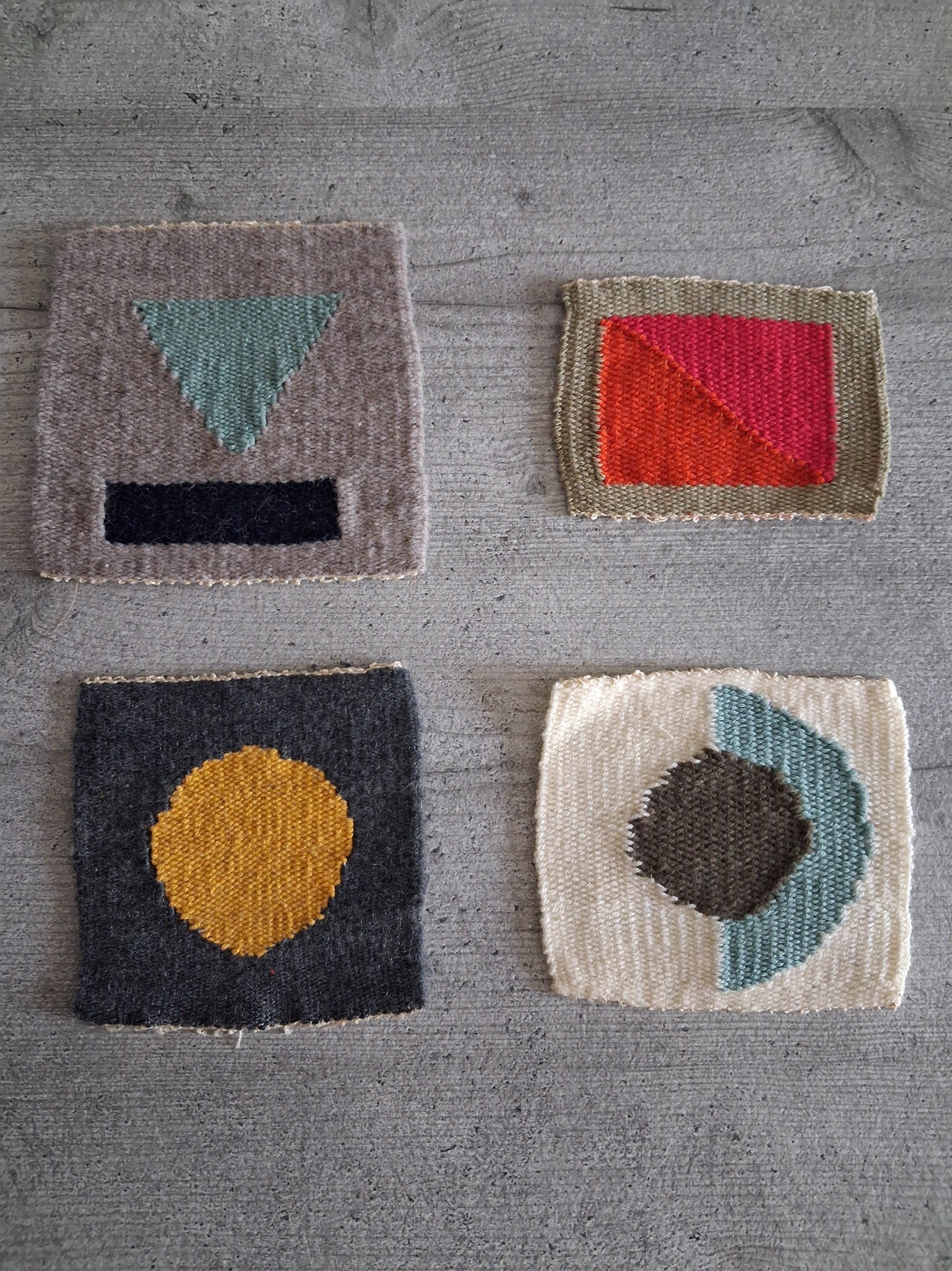
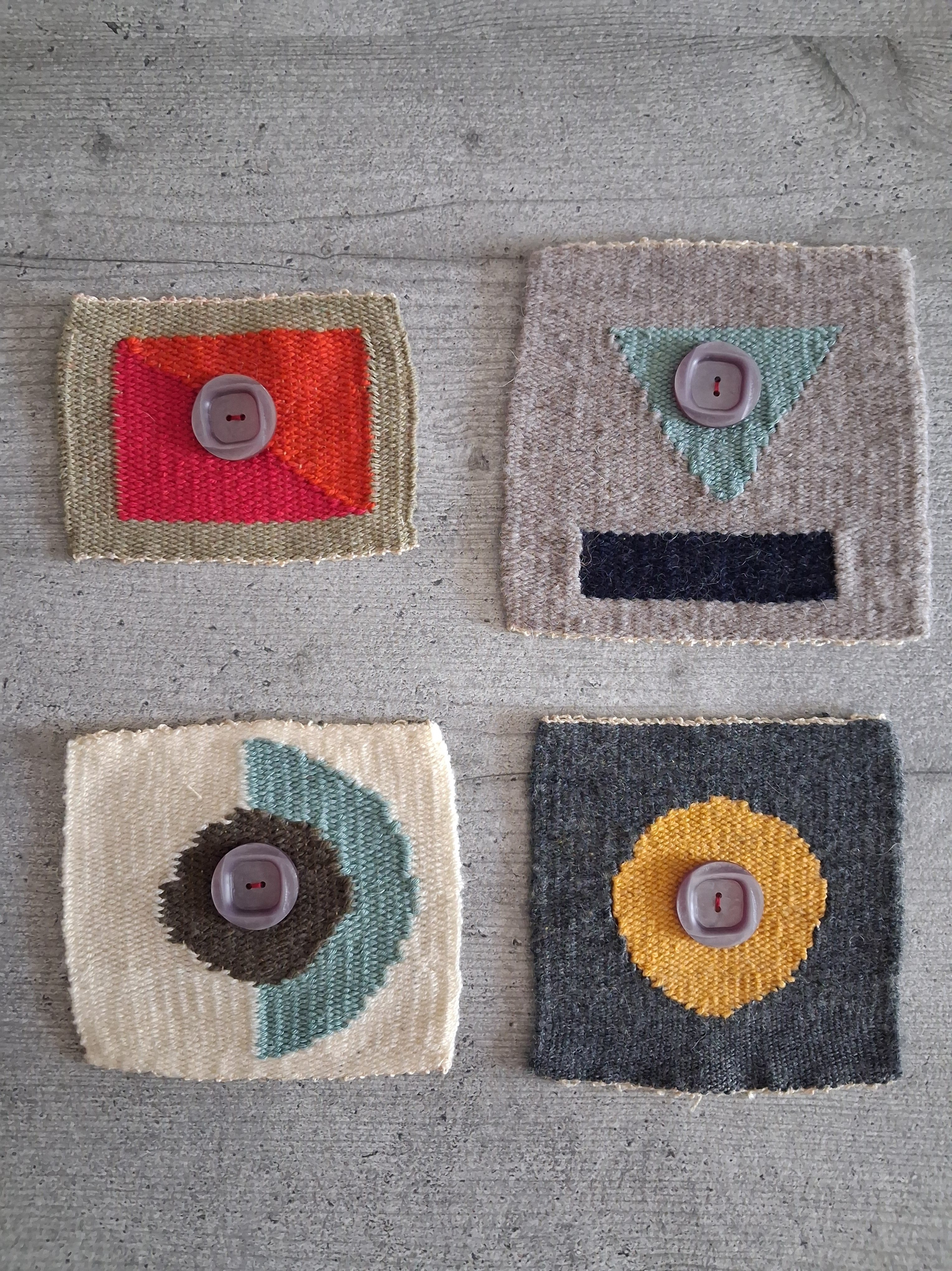
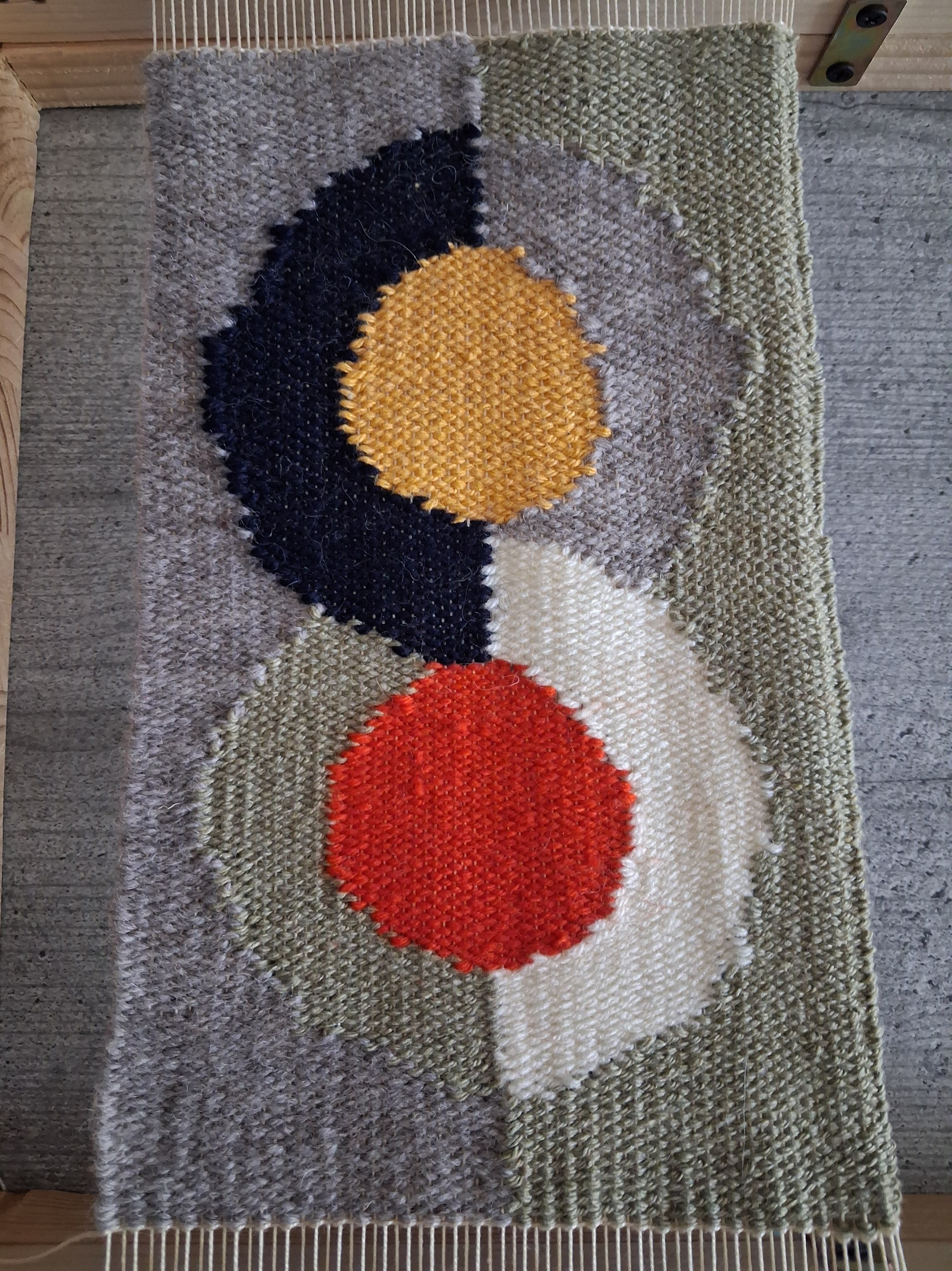
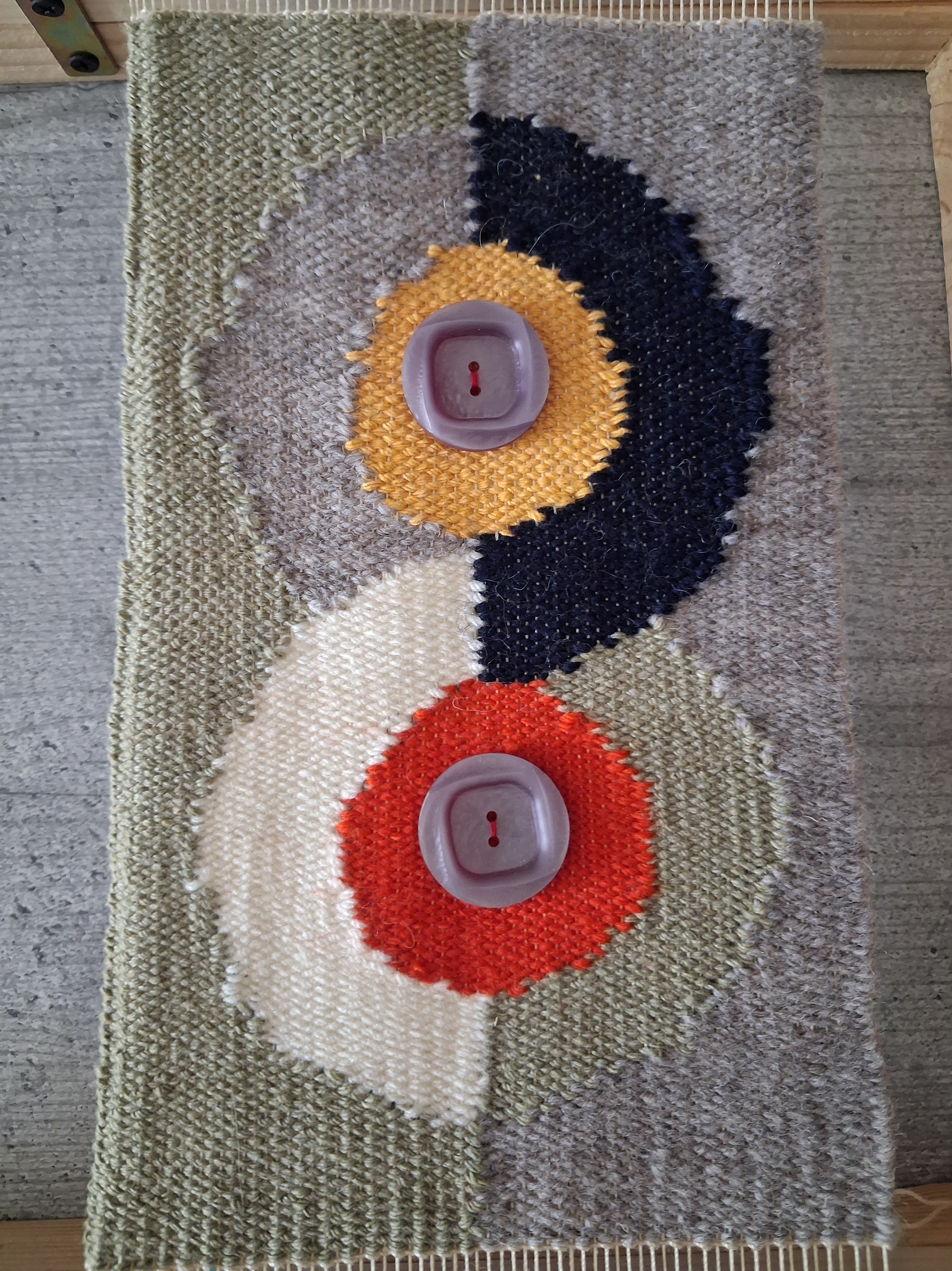
As you can see, my aim was to practise my skills in weaving geometric shapes: circles, squares, rectangles and triangles. Most of all, I wanted to experiment using different type of yarns. Over the years, I’ve bought so much material – not always in a wise way! – and I have piles and piles of yarns that are not suitable for knitting or crocheting…but then I realized, they could be perfect for weaving! I have a mix of different fibers: wool, cotton, acrylic, etc….so why don’t combine them? I started some samples and I liked the way, for example, a recycled cotton interacted with wool / acrylic. Recycled cotton has a tactile and dimensional effect that merges perfectly with the hairy appearance of wool.
The Inspiration
I didn’t want to just weave geometric shapes that were loosely inspired by famous paintings or artists belonging to this form of art. I wanted them to have a deeper meaning.
First of all, I searched for artists who dealt with geometric abstraction, especially someone who was active during the years the buttons were -supposedly – produced. My aim was to create a link between the buttons and the inspiration for the tapestries. So, I started doing a bit of research and I found what – or rather who – I was looking for: Sonia Delaunay. Her paintings not only show the use of vivid colors contrast and geometric forms, she was an exceptional, eclectic artist who was also into textile art. For her, there was no boundary between fine art and textile. She was the perfect inspiration for launching PieLilli.

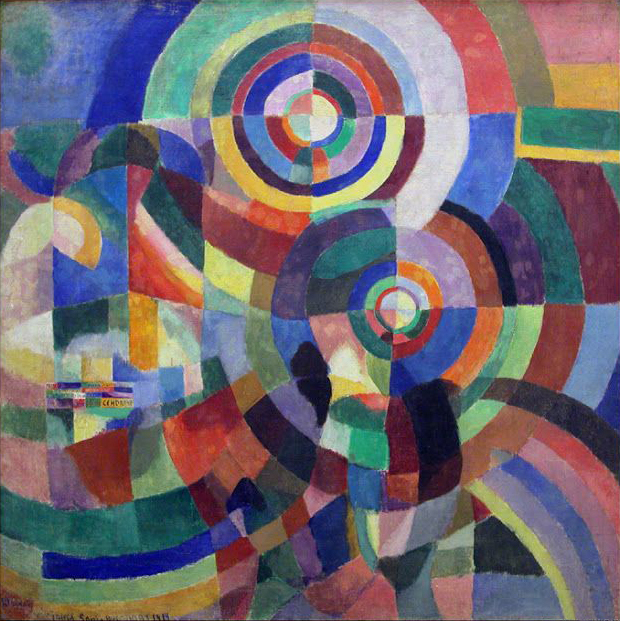
Sonia Delaunay, Public domain, via Wikimedia Commons
Born in Ukraine, she studied in Germany and in 1905 she arrived in Paris. She married Robert Delaunay in 1910. Together, they shaped the artistic scene in Europe throughout the mid-twentieth century. I cannot summarize here all of her incredible works and legacy, so, at the end of the post, I will copy some links where you can find out more about her.
The Soundtrack
Perhaps now you are wondering why I added the word “Jazz” in the title? Well, that’s because I also needed to find a proper soundtrack for my tapestries. I always listen to music while working on anything. I would listen to music all day long, if I could. So, not only did I want my tapestries to be more than simply playing with geometric shapes, I want them to be enjoyed together with music.
Since my sources of inspiration were mid-twentieth-century buttons and Sonia Delaunay, I couldn’t help but think about music tracks from that period. But which genre? I immediately thought about Jazz. Why? Because Jazz somehow is the combination of a rigorous structure and improvisational freedom, and that’s something I experimented with geometric abstraction. Geometric shapes have their rigorous forms, I mean: a square is a square. But when you paint, or weave or simply draw a square, you can put it wherever you want and use whichever color or fiber you wish. This is freedom.
So, in my playlist that you can find on Spotify under the name Post-War Jazz: From the American Heart to Saint-Germain, you will listen to 22 tracks belonging to some of the most important musicians who were active during that period and that I selected because they were also somehow linked to the Paris music scene. The playlist includes the incredible talent of: Miles Davis, Kenny Clarke, Don Byas, Django Reinhardt, Barney Wilen, Mary Lou Williams and Jutta Hipp.
Make yourselves a cup of tea, sink into your sofa, and imagine yourself in a small, dark and smoky Parisian café surrounded by people – and a city – that were still shattered by the hardship and brutality of the war, but at the same time they were yearning for a feeling of hope. Of a rebirth.
More about Sonia Delaunay
Sonia Delaunay
Sonia Delaunay – Centre Pompidou
Sonia Delaunay’s Textiles
The Women’s Studio


Leave a Reply