Per la versione in italiano di questo post, cliccate qui.
When I first started getting interested in buttons, the first question I asked myself was: Where do I even start?“. In a way, we have lived alongside buttons forever, but how many of us truly notice their importance? Or the fact that some are genuine works of art? Or how they have evolved over time, following fashions and materials? I decided to start from the basics. I relied on books and every resource I could find—online and off—to discover their fascinating history and to sharpen my skills in recognizing, collecting, and valuing them.
A fundamental aspect of my research is imagery. I realized early on that I needed to see the buttons. Even through a computer screen, I need to observe every detail and try to imagine their tactile quality. So, I began gathering online resources where these small treasures can be found and studied. I discovered archives, collections, and galleries where you can closely observe specimens dating back thousands of years!
In this post, I’ll start with some well-known and easily accessible sources. Little by little, I will add more of different kinds and in various languages. You don’t necessarily need to spend entire evenings staring at buttons – as I sometimes do – but I can assure you that even a quick look at some of these treasures is well worth it!
The Victoria and Albert Museum (V&A) – London, UK
I couldn’t help but start with the incredible collection of the Victoria & Albert Museum in London. You can simply type “button” or “buttons” into the search field, and thousands of results will appear. You have several options to filter your search by object type, material, place, and even select a specific time period of interest.
If you select “button” under the “Object type” category, you will see only images of individual or grouped buttons. However, I highly recommend not selecting it—at least not right away. Instead, browse through the thousands of dresses, jackets, and theatrical costumes; this allows you to observe them “in context.”
The Metropolitan Museum of Art – New York
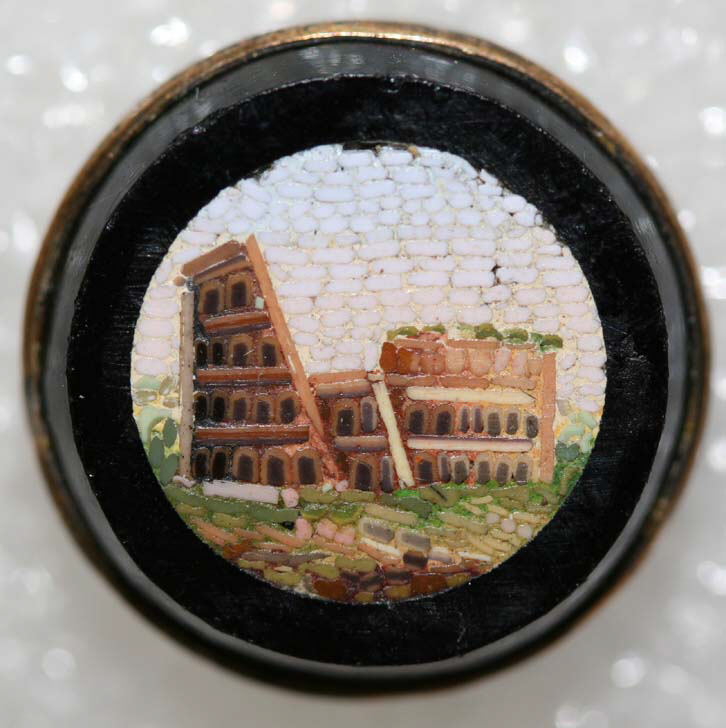
Let’s cross the ocean to New York for another invaluable resource. Here, too, you can set your search using various filters such as object type, material, and geographic location. For example, look at this tiny splendor I found by selecting “Italy” in the Geographic Location field:
Staying in the United States, here is another famous museum housing a vast collection. Their main search page also offers themed categories, such as “textiles” or “European Decorative Arts.” By entering “button” in the search bar, thousands of results are displayed, including buttons dating back millennia.
For instance, by selecting “Ancient Egypt, Nubia, and the Near East” in the Collection filter, you can observe a button dating back to the New Kingdom, Dynasty 18, 1550–1295 B.C! This is one of the reasons I firmly believe that online archives are an invaluable treasure for preserving the past.
Returning to the Old Continent, we have Europeana—a portal that brings European Digital Cultural Heritage directly to your screen. It is an essential tool on my list. One feature I particularly appreciate—also shared by other resources—is the “Can I use this?” search filter. This field allows you to immediately know if you can freely use a resource, if you need to ask permission, or what the specific conditions for use are.
I wholeheartedly support the sharing of culture and knowledge, but I also believe it should always be done by giving credit and respecting the terms of use. In this way, we nourish collective curiosity while respecting the commitment of those who made these archives available. For example, here is an image of a very unique specimen that can be freely shared and used (always mentioning the source!):
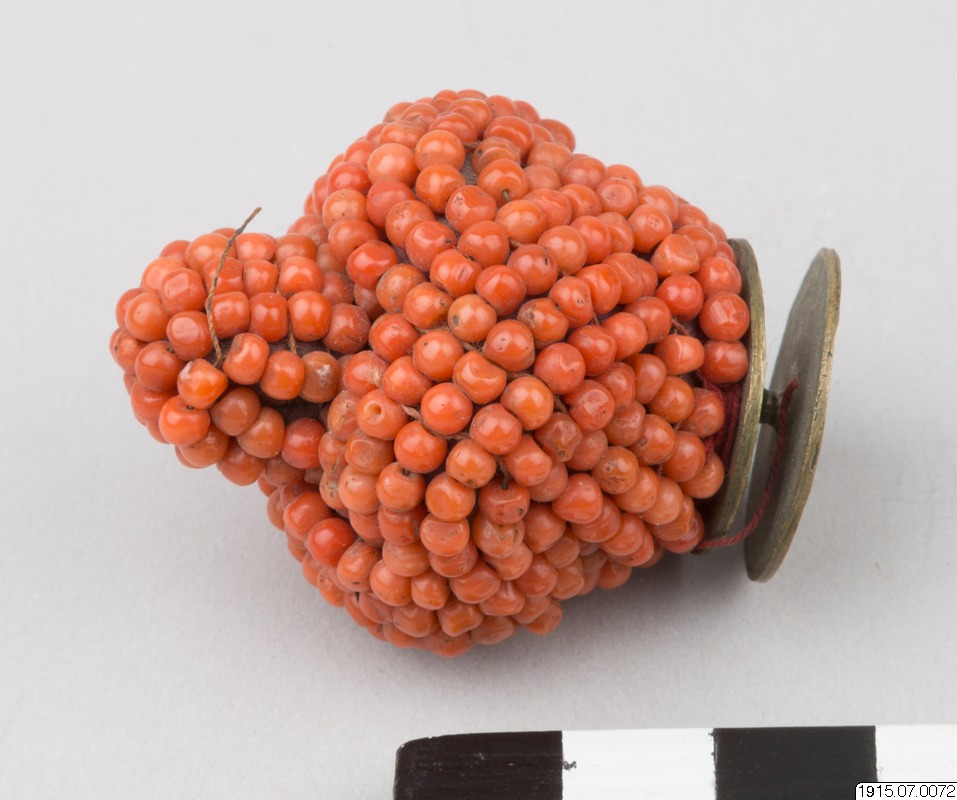
Museum of Ethnography, Sweden – CC BY.
And let’s not forget another fantastic aspect of Europeana: you can navigate the site in several different languages!
Describing in a few words what the National Button Society represents to the world of buttons is almost impossible. Suffice it to say it was founded in 1938, with its first exhibition held in Chicago the following year; since then, countless clubs have been established across the U.S. Their goal has always been clear, as you can read on their homepage:
The National Button Society is committed to the education, preservation and exhibition of buttons.
I will dedicate more in-depth posts to them in the future—hoping to meet them virtually or in person one day—but for now, here is just a taste of their precious resources.
Under the “Resources” page, you will find an invaluable collection of information. I personally find the section dedicated to materials of unparalleled value, thanks to the countless images that allow you to appreciate every detail of these artifacts. But there is much more: instructional videos, fun facts, events, and—for those who want to delve into the more technical aspects—a section dedicated to specific topics where you can find a list of patents.
You will find entries like the 1851 Silk Covered Button patent, which you can then track down on Google Patent Search: an exercise that not only enriches your technical knowledge but allows for a true dive into the past, among the inventions that shaped the history of costume.
I will continue to share more resources here; in the meantime, if you have any suggestions, please write to me!
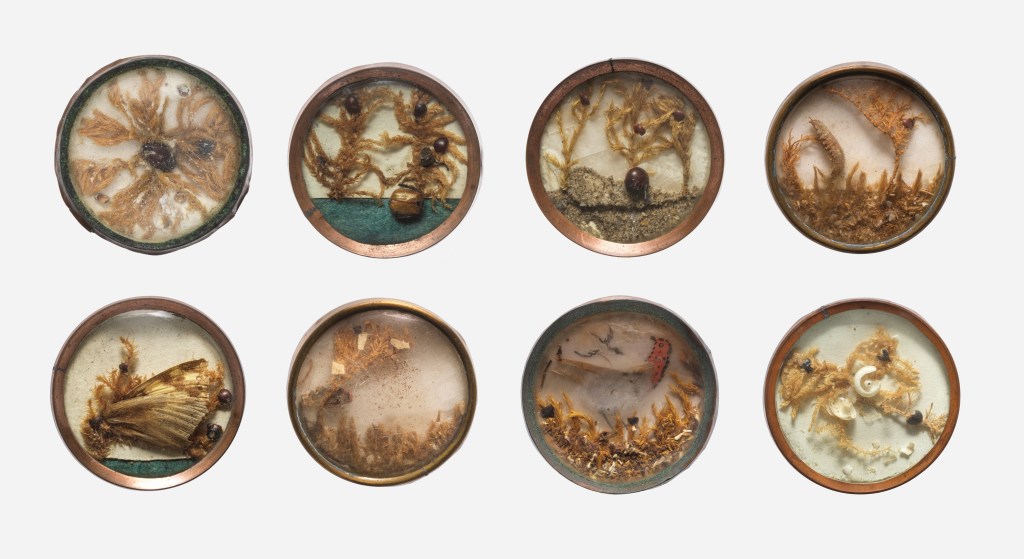
Cover image source: https://www.metmuseum.org/it/art/collection/search/114394 – Public Domain.

 PieLilli
Leave a comment